Saturday, 17 May 2014

Not goodbye but farewell …

We’re entering the last week of exams and the end of the academic year is almost upon us. It’s always hard to say goodbye, but happily the Library remains open over the summer months. This is what to expect, Library-wise, over the summer:

  • Your student card, and hence your Library account, is valid until September 2014. After that you will either re-register and receive a new card or be off to pastures new, but you will have the option to open an external Library account with borrowing rights for a further year on graduation. 
  • While you are still a student with a current Library account you can access databases, e-books and your reading history. If you want to hold on to notes you have made in e-books you should export them before September. 
  • In June and July, the borrowing period for all books with the exception of Short Loan will be three weeks.  
  • The Library databases are provided in accordance with publisher licences that state that material should not be kept after it has fulfilled its academic purpose. Therefore we ask that you delete any online copies of materials downloaded from databases after you complete your exams. 
  • Please remember to return all overdue books and clear all fines. Anything still outstanding on your account could block you from graduating or registering again next year. 

The Library will be open with full services Monday to Friday 9am to 5pm from 26 May. Have a great summer!

Wednesday, 12 March 2014

Twenty Five Years Ago Today ...

... Tim Berners-Lee wrote the proposal for what we know as the Internet. Now he is calling for a 'bill of rights' to protect its independence[i]

The web is changing. Once it was a non-corporate, non-mainstream space, undefined and open to innovation. Two things happened: the computing/dotcom boom, and Web 2.0, making computing and web based companies some of the world’s biggest. Their market? Web 2.0 made the web sociable and interactive, bringing us Twitter, Facebook and Google+, and in the process opened up the web to the ‘prosumer’, producer and consumer of online content – in other words, you and me.

What the big tech companies like Microsoft and Apple have in common with social networking sites is that they try to build up a monopoly by creating “walled gardens” of hardware or websites that discourage travel outside their domains.  At the moment for example you access your gmail account and Google+ and YouTube using a single password. Depending on whether you buy an iPad or iPhone or PC you are restricted as to what programs or software you can use.[ii]This inhibits freedom and discourages innovation[iii] – why innovate for a device that’s ‘locked down’? – so why have we so readily bought into the walled garden scenario of the web? 

A closed system reduces the risk of crashes, glitches and theft[iv]. Cookies installed by websites on your computer speed up connections. And then there’s the attractiveness factor: the “undeniably attractive aesthetic” of the iPhone for example[v]. As we are increasingly living our lives online (making friends, shopping, checking bank accounts), this is important stuff. 

The problem is that what with all the vocabulary about ‘friends’ and ‘sharing’, we tend to forget that our online lives are lived in a corporate environment[vi]. We’re aware of privacy issues, of course, when it comes to things like allowing strangers access to our holiday photos. Yet we continue to upload a huge amount of data about ourselves when it’s often not clear who owns the data. Austrian student Max Schrems created an activist group Europe versus Facebook in order to highlight privacy concerns:
Schrems filed a series of complaints with the Irish Data Protection Agency,
accusing Facebook of retaining data users had tried to delete and also saying that his 
file wasn’t long enough. Facebook refused to turn over some 
information — such as Schrem’s biometic faceprint — saying it was a trade
secret. Even though the claim that the technology the company’s applied
to personal information is proprietary seems reasonable, many lambasted
Facebook for suggesting that users’ data was Facebook’s intellectual property.
[vii]

Even when you’re not signed in, social networking sites and others can track your movements and collect data that you’re not aware of having shared, such as browsing habits, and pass this data on to third party sites including advertisers[viii]. And they’re not the only ones interested. Last year the Prism scandal erupted when it was made public that the National Security Agency in the US was using tech companies’ data to monitor non-US citizens’ online activities[ix]. In 2011 US lawyers unsuccessfully tried to have a UK student extradited to face charges of providing links to pirated material on his site. When Arab Spring protestors in Egypt used social networking sites to arrange meetings and demonstrations, the Egyptian government responded by closing down the Internet[x]. Robert W McChesney, a US author and academic, sees the gathering of online information by the big tech companies, with the assent and collusion of government, as evidence that the current development of the Internet is working against the interests of an open and democratic society[xi]

The Web allows access to worlds of information almost unimaginable twenty years ago – most of the information used in this post was freely available on the Web. Unavoidably legislation is struggling to keep up. But at some point we, the community of surfers and Facebookers and bloggers and everyone else on the Web, have to ask: what sort of online space do we want to inhabit? And what are we prepared to give in exchange?


[i] Kiss, J (2014). An Online Magna Carta: Berners-Lee calls for bill of rights for web. Guardian, [online], available: http://www.theguardian.com/technology/2014/mar/12/online-magna-carta-berners-lee-web [accessed 12 March 2014].
[ii] Anderson, J, and Rainie, L. (March 23, 2012). The Future of Apps and Web. Pew Internet & American Life Project, [online] available: http://pewinternet.org/Reports/2012/Future-of-Apps-and-Web/Overview.aspx, [accessed December 7,2013].  
[iii] Herther, NK (2012). The Future of Mobile. Searcher, [online], 20, (10), pp. 18-25, available: CINAHL Plus with Full Text, EBSCOhost, [viewed 21 May 2013].
[iv] Zittrain, Jonathan (2008). Future of the Internet : And How to Stop It. New Haven, CT, USA: Yale University Press, p 3. [online] available: http://site.ebrary.com/lib/dkitlib/Doc?id=10315687&ppg=12
[v] ibid
[vi] Sar, RK, and Al-Saggaf, Y. (2013). Propagation of Unintentionally Shared Information and Online Tracking. First Monday, [online], 18 (6), available:http://firstmonday.org/ojs/index.php/fm/article/view/4349/3681 [accessed 9 December 2013].
[vii] Hill, K. (2012). The Austrian Thorn in Facebook’s Side. Forbes [online], 2 February, available: http://www.forbes.com/sites/kashmirhill/2012/02/07/the-austrian-thorn-in-facebooks-side/ [accessed 7 December 2013].
[viii] Sar, RK, and Al-Saggaf, Y. Op.cit.
[ix] Weber, H. (2013). President Obama says PRISM “does not apply to U.S. citizens” or people living the U.S., The Next Web [online], available: http://thenextweb.com/insider/2013/06/07/president-obama-says-prism-does-not-apply-to-u-s-citizens-or-people-living-the-us/#!pjviC [accessed 9 December 2013]; The Guardian [online], available: http://www.theguardian.com/world/prism [accessed 9 December 2013].
[x] Hillesley R (2012). Internet censorship: let it rot in walled gardens, Tech Republic, [online], available: http://www.techrepublic.com/blog/european-technology/internet-censorship-let-it-rot-in-walled-gardens/1333 [accessed 2/5/2013]
[xi]Orbesen, J. (2013). When Capitalism Consumed the Internet. Salon [online], April 14, 2013,  available: http://www.salon.com/2013/04/14/when_did_the_internet_become_a_for_profit_venture_partner/ [accessed 9 December 2013]. 

Tuesday, 11 February 2014

The Information Age and the myth of anthropomorphism


If that opening hasn't put you off reading further, then welcome to this short intellectual coffee-break!

How we use words is important. “The limits of my language mean the limits of my world.” (Wittgenstein, Philosophical Investigations 1953) You can trace the evolution of ascribing mechanisms with human characteristics back through history to certain philosophical movements. Personally, I blame the mathematicians and logicians, those fearful meddlers and “Gradgrinds” of history, for this dichotomous mess we find ourselves in. I suppose there is a certain mentality in humanity that would like to assume that people’s behaviour and the machines we build are synonymous. If only we were all perfectly logical. These days we have a habit of talking about inanimate and stupid objects as if they are sentient beings. Regularly you will come across irate people standing over a machine with a mixture of frustration and animosity because the bloody thing is not doing what it should and won’t act within reason - like say humans would. To be clear: Computers do not have “memory” that is in any sense similar to human memory, they are not intelligent and the notion of Artificial Intelligence is just that, a notion, that many argue will never be a reality.

If you haven’t already been told yet, you live in a world that is sometimes called the Information Age and this nonsensical nomenclature has its roots stretching back to Claude Shannon, and his influential paper: A Mathematical Theory of Communication (1948). Since then we have allowed the idea of information to be understood in terms of electrical blips and signal transmission, which is a branch of engineering and applied mathematics. It is important to remind ourselves that Shannon paper is entitled: “A Mathematical Theory of Communication” and was principally a paper on compressing data operations and reliably storing and communicating data. He explicitly states that: “Frequently the messages have meaning; that is they refer to or are correlated according to some system with certain physical or conceptual entities. These semantic aspects of communication are irrelevant to the engineering problem.” He doesn’t care what “meaning” the messages or transmissions have. (Nor, by the way, does Google care about meaning.) Everything is simply algorithmic!

Maybe living in the world that information theorists constructed, we have forgotten how to fit our human understanding to the machines. Wittgenstein says that: “if we construe the grammar of the expression of sensation on the model of ‘object and designation’ the object drops out of consideration as irrelevant.” (Wittgenstein, Philosophical Investigations 1953) We have designed systems that systemically take meaning or “object” from any consideration of “information”. So if you are wondering why your collection of information that you paste into a thesis/assignment/project hasn’t yielded you an “A” remember that that machine hasn’t done the understanding part. You should remember “information” is something to be engaged with and understood and isn’t just its binary form: ”01101001 01101110 01100110 01101111 01110010 01101101 01100001 01110100 01101001 01101111 01101110”.

Friday, 31 January 2014

Drop In To DkIT Library

Library skills training sessions seem to have a dramatic effect on use of Library resources (book borrowing, e-resources and visits to the Library) as evidenced by the spikes in usage in the first term, when most of our training sessions occur.  It has been shown elsewhere that students who use the Library are more likely to do well in exams[1].
So to encourage more of the impressive usage of quality Library resources by DkIT students and staff we are offering an open policy of booking in the second term for both student groups and staff to help you all in your academic pursuits. Click here to go to Skills Training booking form.

We are also offering drop in sessions so you can brush up on your skills. Introduction to the Library provides an overview of how to use the Library and its resources to pinpoint the information you want. The Harvard Referencing Session covers the style of referencing used in DkIT as well as how to use referencing management software, online tools to help gather and store references as you read.

Everyone is welcome. All sessions will take place in the Training Room on Floor 2 of the Library.
Introduction to the Library
Tuesday 4th February, 1-2pm.
Wednesday 5th February, 1-2pm.
Harvard Referencing
Tuesday 11th February, 1-2pm.
Wednesday 12th February, 1-2pm.


[1] Bowles-Terry, M. (2012). Library Instruction and Academic Success: A Mixed-Methods Assessment of a Library Instruction Program. Evidence Based Library and Information Practice, [online], 7 (1), available: http://ejournals.library.ualberta.ca/index.php/EBLIP/article/view/12373 [accessed: 28 February 2014].

Wednesday, 11 December 2013

How to Save References in MultiSearch

It’s important to keep a record of your reading when preparing academic assignments. As you read you’re forming your ideas about a subject and even if you don’t quote directly from your sources, you still need to credit them. Keeping a record of your reading is also useful when you’re organizing the structure of your assignment or if you want to chart the course of your research.

When running a search on MultiSearch, you can automatically save your records without needing to create an account. The important thing to remember is that records save to a temporary folder – you will lose them if you don't take some action on them before closing out of your search session.

  1. Click the + sign beside the record to save it. You can save as many records as you like. Records save to the Saved Items file at the bottom of the page. Click to view them.
                                    
  2. At this stage you can view the record as a Harvard Reference, print it or email it to yourself. When you email the record, you get the reference but not the document which you would have to view in full text and save separately. MultiSearch may not generate perfect Harvard References: check DkIT’s booklet on referencing, Credit Where Credit is Due

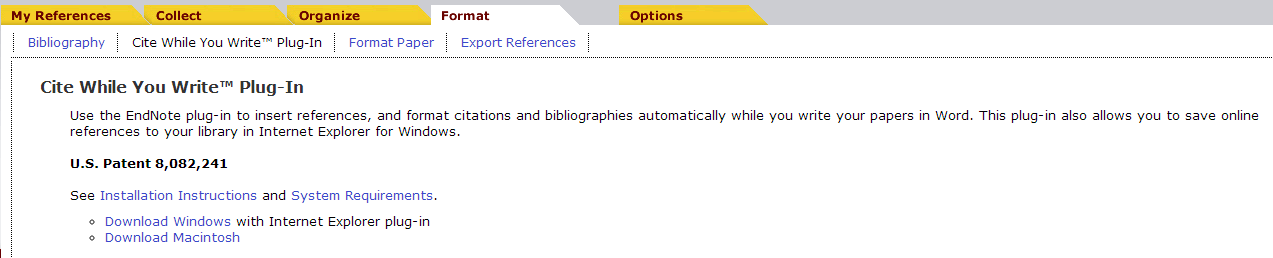
If you have an EndNote Web account, you can also export the record to EndNote by clicking on the EndNote tab and inputting your EndNote Web username and password. If this doesn’t work, you may need to download the Cite While You Write plugin from EndNote Web, which is already installed on all Library PCs.

That’s it! Two simple steps that make preparing assignments a lot easier. Click here to view this guide as a pdf document.

Friday, 22 November 2013

3 months, 39 USBs

Last semester, 39 USBs were found in the Library and never claimed. As well as USBs, a constant stream of lost textbooks, phones, key-rings and clothes finds its way to the Library Desk. We make every effort to reunite these items with their owners: if there are contact details we will contact you to let you know your property has been found. Otherwise, clothes and other items can be picked up at the stand opposite the Library Desk. Anything more valuable or personal such as keys, phones and USBs can be claimed at the Desk.

Sadly, some items find themselves unloved and abandoned. We keep everything we find for three months, but if items are not claimed during that time they will be given to charity, recycled or discarded. For more information about what will happen to unclaimed items see our Lost Property Policy – you can also read a copy at the Lost Property Stand.

So what of our 39 USBs? On this occasion, they’ll be formatted and sent to a refugee school where they’ll help somebody else make a new start. But the moral of the story is, come to the Library Desk as soon as possible if you’ve lost something in the Library – next semester might be too late.  

Thursday, 10 October 2013

Introducing the Kindle ...

Our four new Kindles have their launch on Monday 14th October at 2pm. The launch will incorporate a brief information session on how to borrow and use the Kindle, and in case you miss it, this will be repeated on Wednesday 16th October at 11am.

The beauty of the Kindle is that there's no need to stuff yet another huge tome into a bag already bursting - all your books can be stored on one portable device. Titles in the collection at the moment include The Economy of Ireland by J.W. O'Hagan, and Cuckoo's Calling by Robert Galbraith (aka J.K. Rowling). View the full list of titles from Monday by searching for 'Kindle' on the Library Catalogue. More titles will be added in the coming months. Suggestions are welcome - come to the Library Desk or email acquisitions@dkit.ie.

Tuesday, 17 September 2013

Welcome

Welcome
Welcome all first years and welcome back to everyone else! As you begin to prepare for the new academic year, here are a few pointers on what the Library can offer:
First of all, we are here to help. If you can’t find a book, a journal article, your USB, come to us – we’ll do our best to give you a hand or at least point you in the right direction.
Computers
There are computers and WiFi on both floors of the Library
Library Space
Spaces for group study are located on Floor 1 and for silent or individual study on Floor 2. There are rooms for group study if there is no space on the open floor, and three rooms are available to book at the Library Desk. There is WiFi in the rooms
Library Garden
If you want to take a break from study and enjoy the glorious weather the Library Garden awaits you under the stairs
The Collection
There’s the physical collection of books, articles, DVDs, CDs and theses housed in the Library which you can search using the Catalogue and a self-issue machine where you can check out books, CDs and DVDs
.. and an online collection of books, music, articles, graphs and statistics which is available via our databases and can be searched using Multisearch.
Library Training
Lecturers can book information instruction for your class or group.
We wish you all the best in the coming year and every success in your studies.
“I will study and get ready, and perhaps my chance will come.” Abraham Lincoln

Monday, 13 May 2013

Exam time


Examinations are upon us once more. It’s a stressful time of year for everyone, but with your cooperation and awareness of other students in the Library space, we can hopefully avoid adding to stress levels. Here are a few pointers of what to expect from the Library (and what not to expect, so that you can organize your time accordingly):

  1. The Library will be open as usual from 8.30am to 9pm Monday –Thursday and 8.30am to 5pm Friday on both weeks of the exams, and 10am to 4pm on Saturday 18th May
  2. All group study rooms are open for study – you don’t have to book. This includes the Whitaker Archives and the Training Room unless they are otherwise in use. Please observe the rules of the room you are using (available to view on the sign on the door)
  3. 10 computers on each floor are available to book for one hour, one hour in advance, via the catalogue
  4. Please respect other students by observing the rules of the space. All areas on the second floor are for quiet study only. Even if you are on the first floor, noise should be kept to a minimum
  5. There is no technical or printing support in the Library after 5pm. If you need technical help, you should be here before 5pm 
  6. Access past exam papers from here

We wish you the very best of luck in your exams.

Thursday, 9 May 2013

Modern Life is Rubbish

Every night when I lock up the Library I notice the 'offerings' left on tables - sweet papers, empty crisp packets, plastic bottles, paper cups ... sometimes these are on full display, occasionally it feels as if they have been hidden, stuffed down the side of a PC or under a keyboard.

Collectively each week, 16-20 bags of paper cups, 10-15 bags of plastic bottles and tens of bags of unsorted rubbish are collected from our recycling bins. The reason we cannot open earlier or always at 8.30am is because of all this rubbish, the bits that are in bins and the bits left lying around.

How do the cleaners feel about cleaning up this excess mess? I wonder what makes someone leave a mess for another to clean up?

And the rubbish on the desks feels like the symptom of a larger culture. Many writers suggest that our world view has been dominated for centuries by mechanistic models of how to be (see Margaret Wheatley or Joanna Macy for instance). In this world-view we are all separate: leaving rubbish on the desk has no impact on me, I can shed it and be gone. I have no relationship to the space or to others who use it. These writers also talk of a new way of looking at ourselves in the world - as interconnected, part of a collective system. In this framework when I leave rubbish on the desk it means that I impact on the next person who uses the space, on the people waiting at the bottom of the stairs at 8.30am to use the upper floor of the Library, and on the sense of space. I see the space as a place to be cared for, I assume my responsibility for its maintenance.

Wednesday, 1 May 2013

Education apps for iOS

A couple of months back we looked at education apps for android ... here are some apps that (going by user reviews) could be useful if you have an iPad or iPhone.

Studying/ assignments
StudyBlue. Free app. For serious studiers they say, this app lets you create flashcards, study stats, and more.
My Study Plan. Free app. Organize your time before exams.
Clear. €1.79. Create to do lists. 
Genius Scan Free app. Scan documents and create pdfs.

Learning
iTunes U. Free app. Online catalogue of free online content from leading institutions.
TED. Free app. “The official TED app for iPhone, iPad, and iPod touch presents talks from some of the world's most fascinating people: education radicals, tech geniuses, medical mavericks, business gurus and music legends.”

Words and numbers
Dictionary.com. Free app. Dictionary and thesaurus, medical dictionary, scientific dictionary ...
PCalc Lite. Free app. Scientific calculator.
Google Translate. Free app. If you're learning a language - or going on holiday.
Shakespeare. Free app. The complete works plus searchable concordance.
MyScript Calculator. Free app. Solves equations you write on screen.

Science
Quick Periodic Table of the Elements. Free app.
Physics Full Course. €0.89. Plus exercises.

This is a tiny selection of the world of apps that are out there, so if you're looking for something specific that's not on our list, check out the Apps Store.

Wednesday, 24 April 2013

Digital Citizenry

Now you have your Facebook page, twitter account and devices to view, download, upload, capture and share images, blog, Skype and discuss your every thought, how will you behave? For some the apparent anonymity allows them to take on a digital persona of someone completely different from their “hardcopy” selves. In many ways the internet is replacing your memories; why clutter your memory-bank when you can store it virtually? But this also has led to the phenomena of people learning and developing online. So your online behaviour reflects your actual development as a citizen.

With immediate access we can very nearly capture our every thought in this “stream of consciousness” world.  But would you allow anyone access to all your petty, lustful, spiteful, bitchy, silly, shameful, and wonderfully human ideas? Your anonymity can be illusionary. If someone wanted to access your thoughts badly enough they can. Ask yourself a simple question about your online self. If you were going for a job interview, would you be happy to allow your prospective employer access to your Facebook and twitter account or and to all of the websites you ever viewed? (Some employers in the US have begun to ask job applicants for their social media passwords!)

But the main point of social responsibility on the web is that with any communications comes responsibility, and with the ability to reach large numbers comes increased responsibility on us the users. The democratisation of how people can interact with each other can have a hugely positive spin off with people holding people in power accountable. People power on the web has now become a factor in how large corporations and governmental power is wielded. It also has had a transformative effect on many old consumerist strangleholds. Young people have “liberated” their music, films, games, and telecommunications and used uploaded videos to highlights human rights abuses in totalitarian regimes, and piano playing cats!

In many ways the internet is this generation’s voice, its beat poetry, avant-garde cinema and rock and roll all blended together. So it’s your responsibility what you leave behind, your record of what you are. Maybe it would be good if you decided to “use it wisely”. Well just a little!

Wednesday, 10 April 2013

Step back in time with DkIT Library Archives

Ever wondered what DkIT was like in the early days? …Take a step back in time to the opening of the new Regional Technical College Dundalk on Monday, 3rd May 1971.

Did you know that this was not the original site chosen for the College? The council originally planned to locate the College in the old Louth Hospital on the Ardee Road, which is now part of the Grammar School at the top of Stapleton Place. 

Some of the courses on offer in the first 1971-1972 prospectus were:
Electronics, civil & mechanical engineering, £25 per annum
Business studies diploma course, £25 per annum
Secretarial studies course, £10 per annum
Others included telecommunications, diploma in banking and motor engineering.
Some of the activities on offer from College Societies in 1974/75 were archaeology, music, pottery, French film session, and canoe building.

Where have all the canoe builders gone, I wonder?

Here’s a brief piece from the college newsletter ("Pulvis Tauri") of February 1972: “MID-WEEK DANCES – Following numerous requests for mid-week dances the Services Committee are holding a dance in the canteen on Thursday 24th.  Dancing will be from ten o’clock until one and everything else will be from one o’clock onwards.  The Trolls will be playing for you and they are reputed to be a very versatile group, so it should be pretty good.  Admission is 25p and is open to students, staff and their friends.”

This is only a small snap shot of what the RTC had to offer in the early years. DkIT Library College Archives is, as the name indicates, an archive of documents, photographs and more relating to the college from its foundation right up to the present day. We rely on donations, so there may be gaps in the collection. DkIT Library College Archives is a work in progress which we hope to have online and ready for viewing in the near future.

Wednesday, 27 February 2013

Engineering Pop Up Library


No time to visit the Library? We're bringing it to you!
If you're looking for quality information to use in your assignments and projects, or you want to know how to reference the books and journals you've read for your project, look no further: there will be a 'Pop Up Library' opposite the Coffee Dock on Monday 4th March. Come along between 10am and 11.30am, or between 12.30pm and 2pm, and we'll do our best to answer your questions. Everybody's welcome.  

Monday, 18 February 2013

If the App fits ...

Juggling assignment deadlines, group work, classes, exams? You may already be using apps to help you organize your study, but here are a few more that could be useful if you have an Android phone:

Assignment Planner - this free Android App by Gene Cahill promises to help you keep track of your assignments, and judging by the user reviews is doing it quite well too.
 
Assignment Planner can be downloaded from Google Play app store for free and if the ads running at the bottom bother you, the pro version for € 1.19 doesn’t have them.
The app allows you to sort assignments by due date or course, set reminders for approaching assignments' due dates, mark them when done and keep track of your grades.
If you feel like exploring more apps in Google Play below is a list that could make your academic life a little easier:

Babbel: for learning languages.

Merck PTE HD: periodic table of elements, with detailed and precise information.  A comprehensive tool that covers “from classification to element features to their history of discovery such as relative atomic mass, melting point and boiling point, density, appearance and additional properties for each individual element”.  A must have for Applied Science students.

Chemistry Helper: quick reference for chemistry students.
   
Math Formulae Lite: list of all important formulas in algebra, geometry, trigonometry and calculus.

Perfect Ear: training tool with a set of exercises for ear training, a scale viewer tool, a pitch trainer tool, and instruments such as piano, guitar and bass.

Statistics Quick Reference: with all concepts explained and examples.

Physics Cheat Sheets: collection of physics cheat sheets and quick reference cards.

If you have an iphone or ipad, you probably already know about the education apps section of itunes - we’ll be reviewing some of the more useful apps in the coming weeks.

Wednesday, 6 February 2013

Computers in the Library

There is a new system operating on Library computers, whereby they will automatically log out after 15 minutes of idle time. This is to try and ensure that everyone who needs to can avail of a computer. With only 100 computers in the Library to serve a student population of almost 5,000, there is huge demand on pcs, especially at assignment times and coming up to exams.
Remember that if you’re working at a computer you must regularly save your work. If you’re going to be away from the computer for more than 15 minutes, the pc will log out and all belongings will be removed so that it’s free for someone else to use it.

Wednesday, 30 January 2013

For your entertainment....

Have you noticed the new material on our shelves? In December 2012, the Library ordered a broad range of DVDs, fiction and general interest books – some of which will be useful for your studies, but most of which are for pure entertainment. Examples include:


Mad Men
Avengers Assemble
Persian Fire
The Snowman

As some of you may be aware, the Library applies fines to items that are returned late. This is to encourage members to bring their books back on time so that others, such as their classmates, also have a chance to borrow the books during the semester.

The new stock recently added to our shelves was bought using money collected from fines. We hope you enjoy!

Wednesday, 23 January 2013

The New Library Website

The Library is changing its webpages on the morning of Friday 25th January.

We’ve re-designed them to make it easier to find information on all the Library has to offer. We’ve kept the search features you already know, but now we also have a search box on the right to let you search all of our resources no matter which Library webpage you’re on. We’ve updated details on using the Library, listed all of our resources in one section, and added content to support your learning, teaching and research.

Your feedback is essential! Let us know what you think using our online suggestion box or by emailing library@dkit.ie. We will be running drop-in sessions in the coming weeks to give you a guided tour of our new webpages. These will be advertised shortly; feel free to come along to one of them.

Wednesday, 12 December 2012

Tallman hijacks Writer-in-residence gig at DKIT

Hello all,

Ferdia Mac Anna here.

I am the newly appointed writer-in-residence at DKIT.

I am tall with invisible hair and peculiar outlook on Life.

Also, I believe that writing is a wonderful and creative and important endeavor and I am keen to encourage writers as well as beginning writers and indeed any kind of writer, to express themselves as much as possible whenever possible.

I write a Blog which you can visit by clicking here http://ferdiamacanna.blogspot.ie/

Happy Christmas
Ferdia